




Of my four great-grandmothers, my life has overlapped with all but one: Leona, the mother of my paternal grandfather, with whom I share a middle name. Though we never met, I feel a connection to her that, I hope, extends beyond having been christened with her name. I think of her often, perhaps more often than makes sense for someone who exists for me only in photographs, family stories, and the space left behind after her only son, my grandpa Ron, died in 2019. Leona’s life and mine are separated by years and circumstances, but I can’t help but feel that there are threads of her life woven into mine — hers cut short just before mine emerged, but somehow still entwined.
Leona was by all accounts one-of-a-kind — quick-witted, good-humored, and warm-hearted. She was an active member of her Methodist church, where she taught Sunday school and was famed for her baking skills. She was an avid bridge and euchre player. She had pristine manners and expected those in her life to share them. After my dad received a birthday card and check Leona mailed him at college, her canceled check and his thank you note crossed in the mail. Some weeks later, my dad received another card, again from Leona, this time contents simply reading, “I’ll take my canceled check as a sign that you did indeed receive your birthday card.”
Above all, Leona has been described to me as a woman devoted to God and to others. “Mrs. Callen led a long, rich life of caring service and graceful nurturing, and is survived by many friends and relatives, all of whom loved her,” her obituary read. I can scarcely think of a better legacy to leave behind than that.
Leona, then 86, died sometime in the early morning hours of December 5, 1991, less than three weeks before I would be born on the 23rd. It was an answering machine message from the county coroner’s office that broke the news to my grandpa: his mother, who he had just seen, who was in good health despite her age, was found dead in her home outside of Akron, Ohio. He’d soon find out that her death was ruled a murder. Leona had been beaten to death by someone who had broken into her home, presumably to burglarize it, and was surprised to find her there. Her body was discovered some hours later by her next-door neighbors, who let themselves in with a spare key after another friend called them out of concern that she hadn’t answered her phone all morning. My grandparents had just returned to Michigan after spending Thanksgiving by Leona’s side, unaware that it would be the last time they would see her.
The man who killed Leona remained at large for about a month — a period of uncertainty that I have to imagine compounded my family’s grief. Eventually, after the city offered a $2,500 reward for information, he was identified, found, and arrested. Bond was set at $750,000 cash on charges of aggravated murder, aggravated burglary, and aggravated robbery. A newspaper article about his arrest called him an “indigent and convicted felon” on parole for drug charges and noted that he’d been living on and off the streets in recent years. He was 28 years old.
Capital punishment was (and is) legal in Ohio, and the man who killed Leona was considered a shoo-in for it. Who would object to the execution of someone responsible for a crime as senseless as bludgeoning an elderly woman to death in her home? My grandpa, Ron Callen did. Completely opposed to the very premise of capital punishment, he was resolute from the beginning: he did not want the death penalty used in his mother’s name. Alongside his wife, my equally remarkable grandma Carolyn, Ron appealed to the county prosecutor to seek an alternate sentence. Eventually the prosecutor — who had been elected on the promise to enact capital punishment more swiftly and severely — conceded to Ron and Carolyn’s principled insistence. If the man who killed Leona pled guilty, thus sparing a trial, the prosecutor would instead pursue life imprisonment. With the evidence stacked against him, the man did precisely that. He would not kill again, but neither would he be killed by the state.
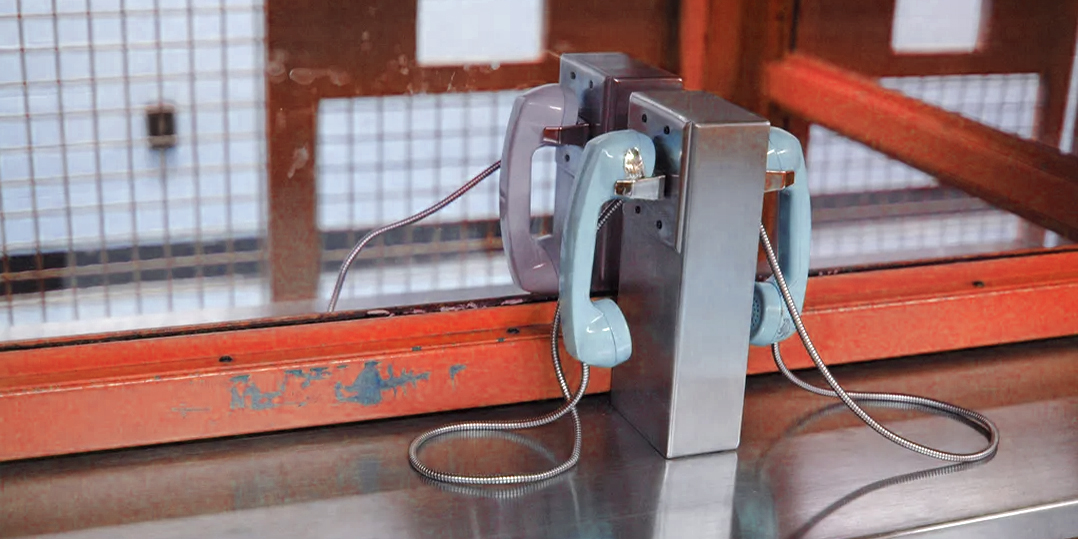
In the years that followed, Ron and Carolyn joined the anti-death penalty movement. There, they found healing in connecting with others who suffered similar losses, forged lifelong friendships, and spoke against capital punishment to groups across the country. Eventually, amid skepticism from some close to them, they participated in a mediation program offered through the Ohio Department of Corrections, which gave them the opportunity to communicate with, and later visit, Leona’s murderer in prison. Accompanied by two dear friends — a former Catholic priest and his wife, whom they had met through their involvement in Pax Christi, they made the trip from Michigan to the Mansfield Correctional Institution in Ohio, to speak with Leona’s murderer and let him know, face-to-face, that they forgave him. Although counseled against it by some, my grandparents felt strongly that this personal step needed to be a part of their healing process. I know little about that encounter except that it ended in tears for both parties and that Ron and Carolyn never expressed regret over having done it.
Ron died in November 2019, seven months after his beloved wife Carolyn, and almost 28 years after his mother Leona. While sorting through his possessions in first few days after his death, my parents found a copy of the statement he delivered at the sentencing in 1992, having asked for and been granted the chance to speak. He closed those remarks with the following words:
We do not support the death penalty. Execution would in no way benefit my mother. Even recognizing the terrible act this person committed, we believe taking his life in retaliation would only further the already excessive violence in our society and lend to this the name of society. It would turn the murderer into a victim during years of legal appeals.
Finally and fundamentally, based on our Christian beliefs, we oppose the death penalty. As Mother’s minister said at her funeral, God weeps because two lives are destroyed, and two families must find their way out of this and seek peace.
We do not have hate in our hearts. We rest in this way of justice.
I was hardly conscious when these events unfolded, still in my own mother’s womb when Leona was killed, too young to walk or talk by the time her killer’s sentence was announced. Still, I think of them often and am usually driven to tears when I do. In the face of far less egregious offenses, I have held onto my own bitter resentment much more tightly. I fear that if ever faced with a tragedy as senseless as this, I could be crushed by my grief and my rage, that I might abandon my faith in God’s goodness rather than seek solace in it. I have real doubts about my ability to muster even a modicum of the kind of mercy my grandpa did.
It is easy to delude ourselves into thinking that our convictions are steadfast and unyielding, that we will not waver in them no matter the circumstances. But the difficult truth is that we don’t know how we’ll respond to a given situation until it happens. Hypothesizing has its limits, and I suspect that the human tendency towards self-aggrandizement makes questions of “What would you do if …” more unhelpful than helpful in the end. My grandpa’s commitment to non-violence and opposition to the death penalty moved from comfortably abstract to painfully personal in the wake of his mother’s murder, and yet he remained firm in those convictions. His belief in the inherent worth of human life, the futility of revenge, and the potential for redemption did not shatter, but solidified in the face of this tragedy. I am in awe thinking about it. My own self-interest has shrunk my field of moral vision more times than I can count, and I have — thank God — never had to face anything as remotely earth-shattering as the murder of a loved one.
But my grandpa would point to Jesus before he would point to himself. He would insist that it wasn’t his own goodness that made forgiving his mother’s murderer possible but rather the goodness of God revealed in Christ Jesus: the God who loved us enough to become one of us, who lived among the poor and gave up his life on a Roman cross — another instrument of capital punishment — in order to redeem us all from sin and death. A God who commanded us to love our neighbors and forgive our enemies. My grandpa’s faith meant he could not count anything beyond the power of God to redeem or anyone beyond the ability of God to forgive, and in the face of a loss that he knew he would spend the rest of his life grieving, this same God led him away from easy anger, quick hatred, and blind retribution and towards mercy, a kind of miracle wrought by faith. Not a faith in his own unwavering convictions, but in the unwavering love and grace of God.
The nightstand in my bedroom now bears a converted oil lamp that I inherited from my grandparents after their deaths. It is blue and gold, with crystal prisms dangling from the frosted glass shade and small flowers and bumblebees painted along the base. It doesn’t quite match the rest of my décor, but I love it all the same, especially because before it belonged to Ron and Carolyn, it belonged to Leona. Whenever I switch it on or off, I think of her, the remarkable son she raised, and how brightly the light of Christ shone within their lives, how brightly it still shines for me today.








Beautiful. Thank you for sharing your story.
Our family has a similar story. My sister Cathy was murdered in 1988 at 29 years old. In 2017, her son and myself met Ronald, the man who had killed her. By choice Ronald is still incarcerated as he will not go to his parole hearings. Cathy’s son sums it up well when he says that the one thing he is certain he has done right in his life was to meet Ronald and forgive him. Only God can fill our hearts with forgiveness and when He does, it is life changing. It does not remove the grief, but it softens the blow and it redeems the tragedy of two lost lives. Before my sister died my father, a lawyer, often spoke out against capital punishment and the death penalty. At that time he was often asked what he would do if one of his daughters was murdered. After Cathy’s death he finally had his answer, “I would still speak out against the death penalty.” As Elizabeth so eloquently says in this article, “His belief in the inherent worth of human life, the futility of revenge, and the potential for redemption did not shatter, but solidified in the face of this tragedy.”
Nancy, thank you for sharing your story as well. I just never get tired of these real life stories of Christianity being lived out, even in the hard parts